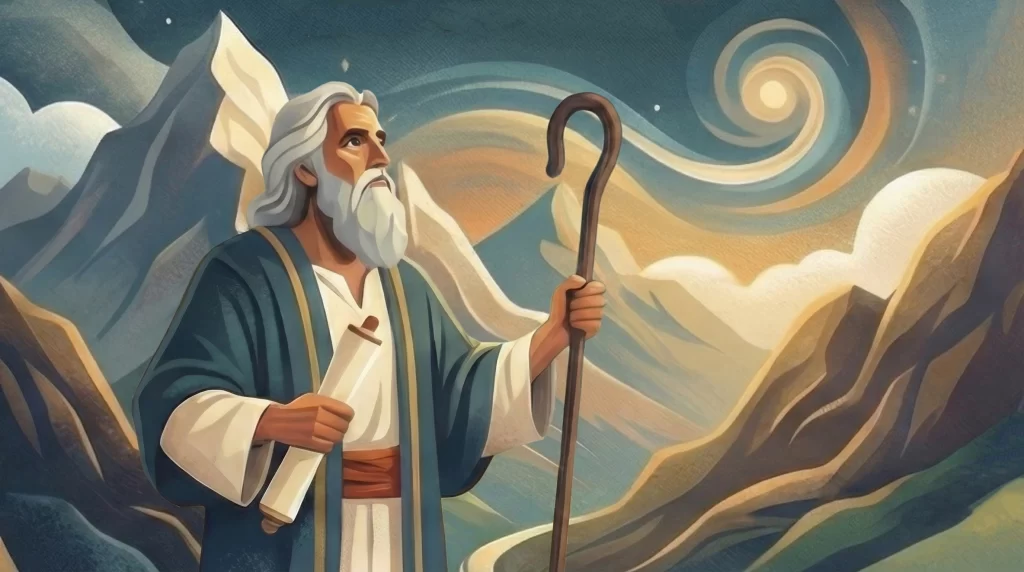
In this sermon on Psalm 73, we explore the honest and relatable struggle of Asaph who found himself envious of the arrogant and wealthy. We examine why it often seems that those who mock God prosper while the righteous suffer. The turning point comes when we enter the “sanctuary of God,” shifting our focus from earthly comparisons to eternal realities. While the world offers fleeting pleasures that end in destruction, God Himself is the only true satisfaction and the enduring portion of our hearts.
Transcript
Well, I’d like to direct your attention in your Bibles to Psalm 73. Psalm 73. The Psalms are given to express all kinds of emotion and struggles in life as well as praising God. And Psalm 73 is a particularly powerful psalm. It’s a psalm of Asaph. Asaph was one of the members of the tribe of Levi whom David put in charge of the worship music that was performed in the tabernacle before Solomon built the great temple in Jerusalem. That gives you the date of the psalm. It tells you when this was taking place. It was during the period of time of the tabernacle. And this psalm is praise to God for his goodness. And it is also a confession of doubt and the struggle that the psalmist Asaph went through as he struggled to think about the nature of God and the world we live in. So before we I’m just going to simply read through the psalm there are 28 verses and it’ll take me about three minutes.
This is God’s holy inerrant word.
“Surely God is good to Israel, to those who are pure in heart. But as for me, my feet came close to stumbling. My steps had almost slipped. For I was envious of the arrogant. As I saw the prosperity of the wicked, for there are no pains in their death, and their body is fat. They’re not in trouble as other men, nor are they plagued like mankind. Therefore, pride is their necklace, and the garment of violence covers them. Their eye bulges from fatness, the imagination of their heart run riot. They mock and wickedly speak of oppression. They speak from on high. They have set their mouths against the heavens, and their tongue parades through the earth. Therefore, His people return to this place and waters of abundance are drunk by them. They say, ‘How does God know? And is there knowledge with the Most High?’ Behold, these are the wicked, and always at ease they have increased in wealth. Surely I in vain have kept my heart pure, and washed my hands in innocence. For I’ve been stricken all day long and chastened every morning. If I had said, I will speak thus, behold, I would have betrayed the generation of your children. When I pondered to understand this, it was troublesome in my sight until I came into the sanctuary of God. Then I perceived their end. Surely you set them in slippery places. You cast them down to destruction. How they are destroyed in a moment. They’re utterly swept away by sudden terrors like a dream when one awakes. Oh Lord, when aroused, you will despise their form. When my heart was embittered, I was pierced within. Then I was senseless and ignorant. I was like a beast before you. Nevertheless, I am continually with you. You’ve taken hold of my right hand. With your counsel, you will guide me and afterward receive me to glory. Whom have I in heaven but you? And besides you, I desire nothing on earth. My flesh and my heart may fail, but God is the strength of my heart and my portion forever. For behold, those who are far from you will perish. You have destroyed all those who are unfaithful to you. But as for me, the nearness of God is my good. I have made the Lord God my refuge that I may tell of all your works.”
Let’s ask God to bless his holy word.
Opening Prayer
Father, we thank you for your great mercy to us and your kindness. And we thank you, Father, that you are the fountain of all goodness, every good and perfect gift. Everything that we enjoy that’s worthwhile and wonderful comes from your hand. We thank you, Father, for such a goodness. We thank you for being a God who is rich in mercy and deals with us according to the compassions we find in Christ Jesus. We thank you, Father, for the truth of that reality that we will enjoy forever. And we recognize, Father, the seriousness of what we’re looking at today. How easy it is to have our heart moved, our focus changed to look at the things of this world to the point of questioning even your goodness. Guide us, Father, as we look at this passage. Help us with the struggles we may have and lead us, Father, in the same way that you led Asaph to new faith and trust in you. We ask this in Jesus name. Amen.
The Danger of Envy
Well, I’m doing this psalm in part because I’ve been reading through a collection of books by the Puritans and this past week I read through George Swinnick’s book The Fading of the Flesh and the Flourishing of Truth which is based on this psalm particularly the last part of the psalm and though I’m probably not going to reference that book hardly at all and what I’m going to say today it was it’s a great book to read and I would commend it to you If you can obtain a copy of it, it’s definitely worth your while. But Asaph is very straightforward and he’s a very honest person. Not many people who struggle with their faith like this. Not many believers confess it in the way that he did. But his confession is so helpful to us. God kept him through the struggle of faith that he had. And preserved his faith as we will see as it unfolds. But it’s a rich passage to help us when our eyes get shifted away from the Lord and we start looking at ourselves and the world around us and making comparisons, it’s easy to fall into the pattern that Asaph fell into.
He starts out in verse one by making a clear statement that God is good to Israel, to those who are pure in heart. That’s exactly where he’s going to end up at the end of the psalm. But as he makes that statement, which is his creed, this is what he absolutely believes. He looks back to a time in his life when he struggled with that very question. And it’s a crucial question to struggle with and it’s a dangerous one. As he says, “My feet almost slipped, my steps had almost slipped.” When you start questioning God’s goodness, it’s a very dangerous thing that’s easily lead you into great sin. And so that’s the issue for Asaph. He knows that God should be good. He believes that God is good. And yet when he begins to look around him, he begins to think, well, why is the world the way it is? How do we look around us and see in this case wicked people who prosper so greatly who live such rich wonderful lives as far as we can see. Why does that happen? And why do I struggle with all the struggles and the miseries that I struggle with? He says, “As for me, my feet came close to stumbling. My steps had almost slipped. For—and this is the greatest sin—he’s admitting to a sin here. I was envious of the arrogant.” I was envious of these proud people who seem to be able to have everything that you would desire in this world.
He goes on to explain that in doubting I mean he didn’t ever stop believing that God is good. He just came he was just questioning it. That becomes clear as you read through here. He’s envious of the arrogant, which is a sinful thing. I saw the prosperity of the wicked. There’s no pain in their death. They seem to go through life with very little pain. And then you know, they seem to die peaceably. And you look around us and we struggle with all these struggles. And we’re Christians. The question is the question that theologians call the question of theodicy. Why is it that bad things happen to good people and good things seem to happen to bad people? If God is good, then why is the world the way it is? It doesn’t seem right that good things happen to bad people. And that’s what he’s struggling with. He’s struggling with that idea. And why does this come about? He didn’t abandon his faith and he didn’t embrace the life of the wicked but he almost did. He almost did. He almost slipped. It’s easy for a person taking their eyes off the goodness of the Lord to look around them, begin to make comparisons with the people around them and start envying the things that other people have and making these kinds of comparisons which weakens our faith. When even though God is good to his people, when our eyes shift away from him and we begin making comparisons with other people, it will weaken our faith. It will cause us to question God.
The Prosperity of the Wicked
In verses 4 to 12, you know, the ungodly, they seem free of trouble. He points out that there’s no fetters to their death. They enjoy long healthy lives really often. They seem to be exempt from the troubles common to humanity. They’re not plagued like other people. They show great power and arrogance. These are powerful people. He’s looking at they wear their arrogance. They wear like a necklace around their neck. Violence is their garment. You would think that violent, arrogant person would not do well in life, wouldn’t you? But that’s not the case. They do quite well really often. Every now and then they get tripped up, but real often they do quite well. In verses 8 to 10, it says they speak with arrogance. They scoff. They speak wickedly using mockery. That’s painful. It’s destructive. They set their mouth against heaven, against God. You know, they are insolent before God. “How can God know what I do?” is what they’re saying. “I can do whatever I want to do. I mean, how could he know what I do?”
It’s just insolence. And so he summarizes all these things in verse 12. He says, “So these are the wicked. They appear always at ease, carefree, comfortable in their life and increasing in wealth.” There you have it. That’s the problem. The wicked do so well in life. So comfortable, always at ease. Back in the 80s and 90s, for about a decade, there was a television program that ran called The Lifestyles of the Rich and Famous. You remember that? It was hosted by Robin Leach. And every week they would show this lavish lifestyle, all the things that these people could do, especially their incredible homes and all the things that they had, all their possessions. And the idea, you know, the point of the show was to encourage people to strive for a lifestyle like that or to at least long for it. If you couldn’t have it in real life, at least you could look at it on television, you know. And he would end his every show he would end with “champagne wishes and caviar dreams.” Maybe you could have a life like that, you know. And you looked at these people, you know who they, you know, these were actors and entertainers and sports heroes and all kinds of people whose lives were nothing like what you would find in a godly person. They lived wicked lives and yet they had all this stuff. This is the kind of thing that he’s looking at. He’s looking at people like that. People who you wouldn’t expect to prosper, but who quite often do. They prosper through their sin and through their wickedness through the very things that they do which is clearly against the word of God causes them to gain wealth and live what seems like a wonderful life at least on the surface and they live lives that are where they are you’ve heard plenty of people in that category scorn God.
How can that be? The psalmist says, “How can that be?” Too often it is exactly what happens. It’s been that way through all history. There are so many examples. One I thought of was Caesar Borgia. I don’t know if you remember Caesar Borgia. Caesar Borgia was the illegitimate son of Pope Alexander VI. Pope Alexander VI was one of those progressive popes who admitted to all of his illegitimate children. And so Caesar Borgia was appointed bishop of Pamplona when he was 15 years old. He became a cardinal three years later when he was 18. He didn’t really want to be a cardinal. He envied his brother who was in charge of the papal forces. He wanted he was a soldier type and He wanted to be a soldier and lead that group. And so he had his brother murdered and he took his place and denied the and he got out of the he was the first person in history to resign from the cardinalate and he lived an incredibly incredibly wicked life. He you there’s not a sin that you could think of that he didn’t commit. And he gained enormous power and he’s influenced people for centuries now chiefly because Niccolò Machiavelli was one of the people that worked under him along with Leonardo da Vinci who was commissioned by him to do some to design some war weaponry and things. And Machiavelli made him the picture of the perfect ruler. He thinks that that’s the way a person should rule. If you’re going to gain power in this world, here’s how to do it. You do it by recognizing that the end justifies the means. So, don’t worry too much about morality. Just do what you need to do to get the end that you’re looking for. But you should make yourself look pious people, you know, you should look like somebody who is a reasonably good person so that they’ll trust you. They should also fear you. Rule by fear. You don’t have to get them to love you. They need need to get them to fear you, but don’t get them don’t let them hate you. If you can accomplish that, then you’re going to rule like Borgia ruled and accomplish incredible things in his life which I think was about 34 years before someone killed him but he’s set up as a model and there’s not a politician in the world or maybe but there aren’t many who haven’t read his haven’t read Machiavelli’s book The Prince which celebrates Borgia’s life and his methods. When you look at people like that and you question why do they prosper?
When we start doing that, if we start actually desiring the things that they desire, then we begin to question our own commitment with God. That’s what happened to the psalmist. Envy is a sin and it was a sin in his case that led to questioning the goodness of God. And he says, “Surely in vain have I cleansed my heart.” I’m living a godly life. I’ve pushed sin out of my life. I’m struggling to be obedient to the moral law of God. I want to be right before God. And what do I get? You know, it’s like I’m constantly punished. I have all these things that happen to me. I’ve have a pure heart toward God, but what good is it done without substance or value? He thinks, you know, when you compare it to the life of the ungodly, he seemed that his piety was worthless. His adversaries, you know, all these people were prospering and and all and and he seemed like he’s being punished and it made no sense to him. The wicked thrived while he suffered.
The Turning Point
Come across that many times in scripture. It’s Job’s basically Job’s question. Other psalms deal with the question. But here it’s remarkable. This is a wonderful psalm because he confesses to the struggle that he has and then you come to the turning point. It’s a it’s like a worldview shift. It’s like what I guess in the business world they call a paradigm shift. He’s looking at things one way and then all of a sudden it flips and he sees things as they are and it’s so radically different. He was when we shift our attention away from wicked people and the stuff of this world and we began to look to Christ to the Lord and what we have in him. Well, things began to look different. That’s what happened to him. It was an epiphany. It was something remarkable that took place. And it happens as he goes into the temple. You know, I should have mentioned I didn’t do it earlier. So, I’m going to back up just a bit and say in verse 15, he says, “If I will, if I spake thus, behold, I would have betrayed the generation of your children.” That’s how will you know? That’s one of the ways you know that he didn’t lose faith. He struggled with faith. He didn’t lose it. If he had voiced the things that he voiced, he he says, “I’m not going to say this to anyone because it would it would damage their faith. It might hurt them.” So, he didn’t, you know, he was holding on. barely but holding on.
And then verse 17, you know, he’s struggling with this, but “when I came into the sanctuary of God, then I perceived their end.” When he comes into the sanctuary of God, you know, I’m not sure that several people suggest different things that must have happened. I think Calvin suggested that it was going to the sanctuary he was reminded of the law of God which gave him insight which maybe that’s so another commentator said that when he goes to when he came into the sanctuary he came you it come in what’s prominent there is all the sacrifices and the sacrificial system which reminds you of the judgment of God and that may have played into it as well but I think that the key thing here is that the sanctuary of God the Old Testament, the temple, the Old Testament temple and the tabernacle that came before it. God made his presence known locally to his people. He localized his presence in the Holy of Holies of the tabernacle. And the psalmist goes into the tabernacle and it’s here that he begins to realize what he has in God, what he actually has. And it’s here that he begin his attention shifts away from the stuff of this world to the eternal his eternity and the eternal destinies of all these people. And he recognizes they’re not going to last.
The Slippery Slope
You know, he says, “Surely you set them in slippery places. You cast them down to destruction. How they’re destroyed in a moment.” In Swinnick’s book he there’s one section in the book where he talks about unusual ways people die. You know you may not be certain of many things in this life. You can’t be certain of lots of things but one thing you can be certain of and that is that you will die. And wicked people don’t spend much time thinking about that reality. But it’s certainly true for all of us. And so he has a section where he describes the death of a number of people like I think Pope Adrian IV got choked on a fly and he died. Seems a little unusual. There was a Greek playwright named Aeschylus. You know golden eagles sometimes will sweep down and pick up a tortoise. And you know, you can’t get to a tortoise very easily. So they’ll take him and drop him on a rock which breaks up in the tortoise shell and then they can come down and get the meat. Well, the Greek playwright Aeschylus was bald-headed and unfortunately his head looked a lot like a rock and that’s how he came to his demise. Death can happen in a thousands of ways and nobody is guaranteed of a moment. That’s that’s his point as he writes those things. He lists a number of other things, but death usually comes much more straightforward and simple than that, but it comes comes to every one of us. You can’t be guaranteed a day. And he points out that it doesn’t follow nature like you would expect real often at the noon of a day, the life is taken. Just when you would think that they were coming into their to their greatest strength, their life is taken away.
That’s what happens to these people who are living for this world. They’ll do anything to gain whatever it is they want and they gain it. God allows it. They gain all sorts of stuff. This is the only heaven they’ll ever enjoy. And soon as all gone and there’s nothing for them. Nothing for them except I think the sinful longings that they have trying to satisfied with this world, they probably stay just not not the blessings that they’re seeking. When people look at the world around them and they desire things and they begin to live for to gain those things, they become addicted to those things which can’t satisfy them. They want these they want they become addicted to things like sex and alcohol and drugs and gambling and gaming and all kinds of things. So almost any kind of a thing a person can become addicted to because they’re looking to that thing to satisfy a heart’s desire. And that thing can’t satisfy the heart’s desire. It gives a moment or two of relief and then the longing comes back. They want more and more and it never never satisfied. Only God can satisfy the longings of the human heart. Only God can do that. God created us with an eternal soul and with a need for him, for himself to find the joy that can only be found where Asaph found it in the temple in a place where you are meeting with God. When you meet with God, you can experience the joys of God. Joys that are more blessed than anything else, far more greater.
The Ultimate Satisfaction
And as thinking about this, it you know, he’s he realizes that I don’t need all those things that I’ve been looking at and envying. I only need the joy that I have in God. I only need him. He’s the one who satisfies my soul and gives me the greatest joy. He says, “I was like an animal. I was thinking like an animal in this world, like a beast, and yet you stayed with me, Lord.” In his this prayer, he says, “You’ve taken hold of my right hand. With your counsel you will guide me and you’ll receive me into your glory.” That’s the end of the believer of the one who trusts God. An eternal future with God. And then he writes these words that we all should have memorized. “Whom have I in heaven but you? And besides you, I desire nothing on earth. My flesh and my heart may fail. But God’s the strength of my heart and my portion forever.”
What an incredibly beautiful, precious passage that is. What a great truth. Yeah, his flesh and his heart did fail. The physical body fails. But God never fails. God’s the strength of his heart and his portion forever. If God is your portion, then you have everything. You’ve got everything. You’ve got all the joys and the blessings and the and the wonderful realities that are in the person of God. All of his incredible attributes which will stir your heart to joy every moment that you’re with him. They can that begins now in this life. And it continues forever and ever for a believer. For the unbeliever, he’s separated from that goodness. So he knows no goodness at all. He does that by his own choice. But God is the portion. Swinnick writes, “If you knew the best God and who it is that offered to you the sweetest love, the richest mercy, the surest friend, the chiefest good, the greatest beauty, the highest honor, and the fullest happiness. You would leave all these coal ships of the world and look and become an adventurer for that other world.” That other world is where we really live. That’s where our home is. And we’re just pilgrims in this world. Other people make their home in this world and they prosper in various ways as long as they’re here. But all of that will disappear. As the Apostle John writes, don’t love the world. And then he says, this world is passing away.
Jonathan Edwards said that the enjoyment of God is the only happiness with which our souls can be satisfied. Fathers and mothers, husbands and wives or children or the company of earthly friends are but shadows of the enjoyment of God which is the substance. These are but scattered beams, but God’s the sun. These are but streams, but God’s the fountain. These are but drops, but God is the ocean. The good things that we enjoy in this life that come from God is just a foretaste of the blessings and the joy that is in God himself. The riches of life forever and with our holy and perfect God is the only thing that can ultimately satisfy the eternal soul of a man of a woman. The only thing that can satisfy your soul is the eternal God himself. And nothing else will last. Nothing else will last.
John Piper, you know, had that famous quote from John Piper. “God is most glorified in us when we are most satisfied in him.” We should find our joy in worship. We should find our joy in the relationship that we have with our good father in heaven. And when God blesses us as he’s blessed us this week, lifting us up when things could have been far worse, helping us through the struggles and the troubles that we have. Bringing new life into the world when we are blessed in such ways. Recognizing that that’s from the hand of God, it should lift our heart to praise him and to rejoice in him. He’s the fountain of all goodness. And nothing is going to be greater than to be able to see and get to know his joys, all of it, forever and ever. Forever and ever, world without end. That’s the future of a believer. What a contrast. If the contrast seems great before, how much greater it is in eternity when we shift our eyes away from the things of this world and we begin to look at our heavenly glory. What a glorious future we have. What a glorious future we have. Let’s trust him. Let me pray for us.
Closing Prayer
Father, we thank you for the beauty of your nature. Father, we thank you that though death is certain for a believer. It is just a portal to glory that we have nothing to fear there. That you come and hold us by our very hand. You take us and lead us the way. Yea. Though we walk through the valley of shadow of death, you’re with us. We’ve nothing to fear. We thank you, Father, that you have made yourself available to us the richest, most precious gift that anyone could have. The greatest blessing is the blessing of yourself. Father, teach us to pray from our very heart what Asaph prayed when he said, “Whom have I in heaven but you? And besides you, I desire nothing on earth.” And when he realizes that his physical body will fade away, You are the You are the strength of his heart. You’re the foundation, the rock. You’re the one sure thing that we can count on forever. And we thank you, Father, that you have given yourself to us through Jesus Christ who offered himself as a sacrifice to pay our sin debt so that we could live before you. Thank you, Father, for these precious gifts and unbelievable. Thank you that there’s joy at your right hand forever. We praise you for it in Christ’s name. Amen.