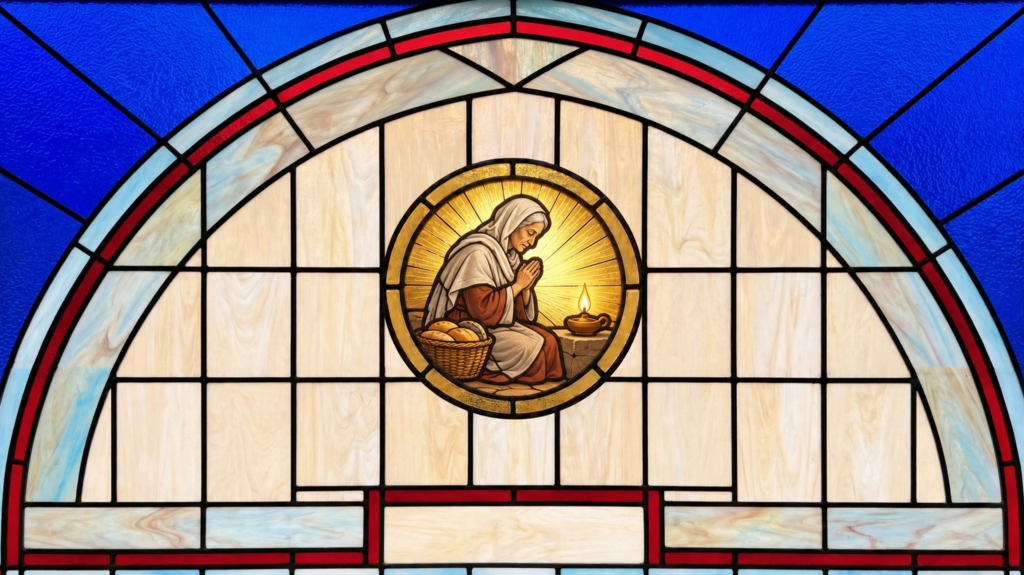
In this week’s message from 1 Timothy 2, we wrestle with the hard promise that women will be saved through childbearing. Weighing three views, we find good hope: the curse is not God’s final word, and the seed of the woman brought forth the Savior. We are called to honor the ways women uniquely serve the Lord and to keep studying His Word.
Transcript
The Perspicuity of Scripture
Well, please, if you would, turn with me once more to 1 Timothy chapter 2. We’re going to look at the last verse in this chapter this morning. Before I do that, I want to talk about a phrase that we use when we’re talking about the word of God, and that I don’t think we use it often enough because nobody knows what it means usually when you say this. When you’re talking about the perspicuity of scripture. The word perspicuity is not a word we use every day. It has sort of an ironic meaning because most people don’t know what it means. But the word means clear or easily understood. So when we’re talking about the word of God, when we’re talking about the perspicuity of scripture, what we’re talking about is that the gospel that is presented to us in the word of God is something that is easy enough to grasp that anybody can comprehend it. It’s open to us by the power of the Holy Spirit, of course, without that nobody is saved, but the word of God is meant to be clear. And that’s generally true with most passages of scripture, most passages with just a little bit of work, you can understand what they say.
There are a few places in scripture, the doctrine of perspicuity is that there’s plenty that you can get that is clear enough that anyone can come to a knowledge of the truth through it. But when we’re talking about certain passages of scripture that are very difficult, we’re coming to one of those today. We’re coming to a passage of scripture written in Paul’s letter that is not exactly easily understood. I think this might be one of those places that Peter had in mind when he talked about his beloved brother Paul who wrote to you according to the wisdom given to him as he does in all his letters, and he says:
“There are some things in them that’s hard to understand, which the ignorant and the unstable twist to their own destruction as they do the rest of scriptures.”
We’re in one of those places today. When Paul wrote this, he wrote this letter to his beloved disciple Timothy, his son in the faith. I am reasonably certain that when Timothy read this, because of his long association with Paul, he probably knew exactly what Paul meant. I should say this right now, we’re going to talk about several different interpretations of this passage this morning. I want you to know there’s only one right interpretation. It’s what God sent to Timothy in this passage, that one truth is the truth for this passage. But it came to us in such a way that it’s very difficult for us living in the 21st century to grasp what Paul’s talking about. You’ll see why in just a moment as we read it.
Why is it that this passage is difficult? There’s a couple of reasons. One reason is that when Paul wrote this little portion of this letter that he wrote to Timothy, he’s using compressed language, he condensed the language. That means that you’re using words and you’re not explaining in detail, there’s thoughts that complete the thought. So the language is very compressed. When we read it today, it’s hard for us to get it.
There’s another reason, and I think this is a more profound reason, and that question is why do we have a passage like this and other places in scripture? There’s a passage in the book of Daniel, in the closing chapter of Daniel, that I’m pretty certain that nobody is going to understand until the people that that’s written for in the future need it, and then they’ll understand it. But we have this passage this morning, and I believe even the way that this is given to us is by God’s design. I believe God designed certain passages to be difficult for us to grasp because it causes us to struggle, to work harder. All the cookies can’t be on the lowest shelf. There’s some cookies that you need to reach for and cause you to stretch a little bit. This is certainly one of those.
As I look at the interpretations, I’m going to give you three interpretations, I’m not convinced that any of the three is exactly the right meaning for this verse. But I’m going to give you these particular three because the interpretation that is given does communicate truth from God’s word. When we look at this passage and you struggle with all the various meanings, I know of at least 40 different interpretations of this verse. There’s a lot of interpretations. I’m not going to share mine until this evening if anybody wants to hear it, but I’m going to give you three good ones, three of the better ones, and we’re going to consider those this morning.
As we look at this, let me give the context before we read it, but I think this is here for us to struggle with so that we come to appreciate some truths in God’s word that we would not otherwise get if we didn’t struggle. I hope that that’s the end result of this sermon today. Let me just remind you of what has come before it. I’m going to begin reading in verse 13, but to just tell you what is going on in this section that we’ve been studying for a few weeks now. Paul’s restricted women from teaching or having authority over men in the church. The whole passage is saying because of God’s creation order, and because of the deception of the woman at the fall, women are to adorn themselves with good works, to learn with respect and submission, but they’re not to teach and have authority over men in the assembly of the church.
So let’s read this and then ask God’s blessing:
“For it was Adam who was first created, and then Eve. And it was not Adam who was deceived, but the woman being deceived, fell into transgression. But women will be preserved through the bearing of children if they continue in faith and love and sanctity with self-restraint.”
The woman will be saved through the bearing of children if they continue in faith and love and sanctity with self-restraint. Let’s ask God to bless his word.
Father, as we come to this passage, we recognize that this is important, this is an important word from you. We recognize that the doctrine of salvation is here, and Father nothing is more important to us than that. We pray Father that you guide us into your truth this morning. We pray Lord that you open our eyes so that we may see the wonderful things from your word. Bless us Lord as we study this today and help us to understand in Christ’s name. Amen.
Interpreting the Text
Let me begin by making a couple of observations and bringing up the key things that the various interpretations hinge on, but I guess first I should just address the obvious problem. When you read this verse, it says women will be saved through the bearing of children. That’s the obvious meaning, isn’t it? Women are going to be saved through the bearing of children, and yet you know that’s not what Paul means. The Apostle Paul hasn’t sacrificed and traveled all across Europe and suffered in the way that he has in order to promote the truth that we’re saved through grace by faith alone, and it’s not of works, there’s nothing that you’re going to be able to do that’s going to merit or earn your salvation, and then undo that with this verse. That can’t possibly be his meaning, and that’s obvious, no one really takes that as the meaning. So we know that’s not the case, women are not saved because they have children. That’s not what Paul is saying. So then the struggle is, what does he mean? How do we understand this verse?
There are several things. First of all, you have to decide what the meaning of saved is, the Greek word sozo. In this form right here, it’s sothesetai, and that means that it’s a future passive third person singular. My Bible reading here says “but women will be preserved through the bearing of children,” and the word women in my Bible is in italic. The reason that it is in italic is because it’s not in the original at all. The Greek doesn’t have women in it at all. The King James here says something like “but she shall be saved through the bearing of children” or “childbearing”. That is the case, it’s literally saying she shall be saved, that’s singular. She shall be saved. That’s just an observation, but you have to also notice that as soon as it says she shall be saved through bearing of children, it says if they, and that’s plural. If they continue in the faith and love and sanctity with self-restraint. A little complicated, isn’t it? But that’s important. That tells us something about the “she”. The “she” is representative of women. You can draw that from that little association. That’s something that’s going to shape the interpretations.
The second one is she shall be saved, I think the King James says “in”, but the word dia in Greek means through or because of, it could be cause or it means basically the same idea as the English word through. There’s several different possibilities with that word and its meaning.
And you have the word childbearing. That’s a difficult word. The reason that childbearing is difficult is because it’s a noun here, there’s a verbal form of it in chapter 5, but as a noun, this is the only time this is mentioned in the word of God. It’s the only time that particular word comes up in all of scripture. What exactly is meant by this word? The word is singular, it’s a compound word, child bearing, or maybe the word that’s translated child actually is a plural kind of a word, it’s like children bearing. But the word is singular, and what the word actually refers to, the meaning of that word is the actual giving birth to a child or raising that child. It was used in the first century and by the church fathers to describe raising a child, not just the process of giving birth to a child and nurturing that child, bringing them up. You have that here and you have that in chapter 5 as the younger widows are to marry and to raise children. That’s what Paul says. So there’s that issue you have to struggle with.
What does it mean? What does the word salvation and saved mean? Does it mean eternal salvation in this verse? Or does it mean preserved? Or is it preservation from something? In the New Testament, for example, in Mark’s gospel chapter 10, in that story of blind Bartimaeus, Jesus heals blind Bartimaeus. Jesus says to him, your faith has healed you, that’s the way it’s translated in our Bibles. The word is salvation or saved. Your faith has saved you. The word saved can be translated as healed. That’s the idea that was being conveyed there, or it can be translated as preserved, it means basically the same thing, we use the word saved in English in all these various ways. You say to the lifeguard, you saved my life. That doesn’t mean that you’re going to heaven. It means that your life was preserved. So you’ve got that issue to struggle with. Does saved mean saved in this or does it mean something else?
Because you have all these variables, you can put them together in all kinds of ways. That’s why I’m aware of about 40 different interpretations. When I look at a commentary, I’m happy if I can find two that agree on something. There are certain interpretations of this that are the strongest, and so I’m going to give you three of those today.
Three Interpretations
Preservation from the Stigma of the Fall
The first one, they’re taking the word saved, let me comment and give you my understanding of the way we should take the word saved. I think that the word saved here is talking about eternal salvation. We’ll probably get to a couple of versions that do that with it at least. The reason is because every time the Apostle Paul uses the word saved, he means eternal salvation. If you look back to the previous chapter, when he says:
“It’s a trustworthy statement, deserving of full acceptance, that Christ Jesus came into the world to save sinners, among whom I am foremost of all.”
It’s the word we’re talking about. In this chapter, in chapter 2, just a few verses before, when it says:
“This is good and acceptable in the sight of God our Savior, who desires all men to be saved and to come to the knowledge of the truth.”
He’s talking about eternal salvation. Since it’s every time that Paul uses it, it’s going to be interesting if in this one case he means something different. My feeling, the weight of that is that it probably means eternal salvation. But there are a number of people who disagree with that, among whom is John MacArthur, who is not a slouch when it comes to Bible interpretation. He’s a very respected Bible scholar. I’m going to give you his understanding of this verse.
We’ve just said that the woman being deceived fell into transgression. What is the woman? The woman refers back to Eve. The woman fell into transgression, being deceived. And then it says, but she will be saved through the bearing of children. What he says is that what is being described here, the deliverance here, the salvation here, the deliverance is from the stigma of the fall. He doesn’t think that it means that women can be saved by having children, he says that the Greek word for preserved or saved is sozo, and while it often means spiritual salvation, it can also mean to rescue, to deliver, or to set free. Paul does not mean that women earn eternal salvation for having babies, that would flatly contradict salvation by grace through faith. He points out that a future tense is used here, shall be saved. So that doesn’t refer to Eve, and he’s right about that. It shifts to the plural pronoun, if they continue, Paul’s talking about women in general here.
The core argument is deliverance from stigma. Eve participated in the fall, she bears the weight and responsibility of having led the human race into sin. He acknowledges that Adam is the one that the whole weight falls on if you read Romans 5 for example. The reason we’re born into sin is because we’re all in Adam. But Eve was the first to be deceived and it was initiated through her, so there’s a stigma to that for her and for women. He says the solution is that women are rescued and freed from that stigma through the unique privilege of childbearing and rearing righteous seed. While women historically led the race into sin, women now have the immense primary privilege of leading the race out of sin into godliness. What one of the things that’s unique to women is that they have babies, they raise children, and they spend more time with their children than men do, and they have a powerful influence on their children, and they nurture them, and teach them the word of God, they share the gospel with them, and they raise children of faith. The church is blessed and sustained through that wonderful ministry that is unique to women. If it wasn’t for that, the church would not be sustained. There’s truth in what he’s saying. I’m so thankful that I have the wife that I have, and the mother that she was to my children, because they owe a great deal to her. She raised them, and taught them the truth of God’s word, spent time with them, that I didn’t have to spend. I spent time with them too, but I think a great deal of their spiritual formation came about through her guidance and ministry, so it’s a truth. It’s something that is precious and valuable to the church. If women initiated sin into the world, if it was Eve that did that, and a stigma on women, that is taken away by the role that women have, this is what MacArthur is saying, in fulfilling that role in raising children in the joy of the Lord. There’s that picture of this erasure of the stigma that comes on women. Then he continues by pointing out the last part, if they continue in the faith and love and sanctity, which is salvation in faith and love and with holiness and with self-restraint, those are fruits of salvation. That’s how he takes it.
The Messianic View
Then there’s the Messianic view. When I first studied this years ago, I thought this was a little bit difficult to see, but when you study it, especially using Greek, you can see why so many people hold this view. One of the key words to interpret is this word for childbearing. When you look at this in Greek, childbearing has the definite article with it: the childbearing. It’s not women will be preserved through childbearing, and that causes some people to think does that the mean a particular childbirth? If you make that definite, the usual thing by putting a definite article is that you’re now talking about one specific thing, one specific childbirth. Because that article is there, it doesn’t necessarily mean that in Greek, there’s exceptions to that, but often that would particularize it, it would be one particular childbirth that’s in focus. We’re in Genesis 3, and in Genesis 3, God confronts Adam and Eve with their sin, he calls them out, they’re hiding from him, and as he confronts them, once you get through the confession and all of that, he starts out with his judgments. The very next thing that happens after they confess to their sins is the Lord says to the serpent:
“Because you’ve done this, cursed are you more than all cattle, and more than every beast of the field; and on your belly you will go, and dust you will eat all the days of your life. And I will put enmity between you and the woman, and between your seed and her seed; he shall bruise you on the head, you shall bruise him on the heel.”
That very famous verse, Genesis 3:15, comes next. So they’re saying maybe what he has in mind here is the childbirth, the birth of the Lord Jesus. You remember that verse I read in 1 Timothy 1:15? It’s a trustworthy statement, deserving of full acceptance, that Christ Jesus came into the world to save sinners. With this view, they’re pointing out that that singular pronoun, they take it to be referring to the seed of the woman, which is ultimately fulfilled when Mary gives birth to the Lord Jesus.
That is a possibility. It is certainly true, isn’t it? Salvation of every woman who is saved comes about because of the birth of the Lord Jesus, his coming, his incarnation, the reason he came into the world was to save sinners. It’s true for all mankind who are saved. Understanding it in that way, sozo is the standard New Testament definition, it’s eternal spiritual salvation from sin through the historical act of God through the person of Jesus Christ. They’re saying that Paul is referring to that verse in Genesis 3, and he’s referring back to the birth of the Lord Jesus. An interesting take on the verse. Phil Ryken holds the view, and several other good Bible scholars hold that now. The idea that women are saved spiritually ultimately by the arrival of the Messiah through the virgin birth.
Preservation Through Trial
One more, and that is the view that is held by John Piper. In this view, it’s called the preservation through trial view. When we go back to Genesis 3, this view says that it’s not verse 15 that Paul is alluding to, but it’s the next verse. To the woman he said:
“I will greatly multiply your pain in childbirth, in pain you will bring forth children, yet your desire will be for your husband and he will rule over you.”
That first part of verse 16, I will greatly multiply your pain in childbirth, and in pain you will bring forth children. What he’s talking about here, in this view, he’s saying what’s being discussed here is not physical deliverance in childbirth, but spiritual salvation in spite of childbirth. Let me show you how this works. The key thing they’re looking at with this interpretation is that word that’s translated through, the word dia. What does it mean saved through childbearing? You might say, well, when we read that, we take that to mean that childbearing brings about the salvation. But through can mean something else. Through can mean to endure, to go through. Look at 1 Corinthians chapter 3 and verse 15. They’re looking at this verse because of some similarities in the language. Salvation is mentioned here, for example, and the word through is mentioned.
“If any man’s work is burned up, he will suffer loss, but he himself will be saved, yet so as through fire.”
What does that verse mean? It doesn’t mean that he’s going to be saved because of the fire. He’s going to be saved even though he endures the fire, even though he’s brought through this fire of judgment, but he will be saved. They’re taking this in the same way. You have this judgment on women of sorrow and difficulty. This view is saying, yet they will be saved, they have all these sorrows, and as they experience the sorrows, the pain and the suffering, the difficulties that’s involved with giving birth to a child and raising that child, that whole process, it’s a painful process. That judgment that took place in the beginning, it’s a painful process. There’s all kinds of grief that’s associated with not just the birth itself, that’s what you tend to think of, she goes into labor and she suffers. But if a woman has a child and raises that child, she’s going to suffer. You bring a child into this sinful world, you’re going to suffer. It’s a difficult thing to give birth and to raise a child. The struggle with conception, people who want to have a child and are not able to, that’s tough. Some of the most honored women struggled with infertility:
- Sarah
- Jacob’s wife Rachel
- Manoah’s wife (the mother of Samson)
- Elizabeth in the New Testament (the mother of John the Baptist) and others
Struggled because they couldn’t have a child. You know how painful that is? You have a child and they die in infancy, or you have situations like that that just cause great, great pain. That’s part of the heartbreak of a mother and the struggle to give birth.
John Piper, with his pastoral heart, sees that as the main idea in this passage. When a woman is going through this kind of suffering, it’s easy for her to think that God is not pleased with her, it’s easy for her to think that it’s all over for her, and she needs to take comfort in the truth and the reality that her salvation is secure in Jesus Christ. That great blessing will follow. He sees the end, and the eternal blessing is more than we can imagine. He has answers that will thrill us on that day for these struggles and problems. Salvation comes when they continue in the faith, in love and sanctity with self-restraint. Those are the fruits of salvation, those are the evidences of a person who is truly saved. They persevere in faith and love, and the process of holiness is true for them, they become more and more like the Lord Jesus, and they practice self-discipline. Those are natural fruits of a saved person, that’s just saying that they’re saved.
The Gospel Response and Conclusion
The gospel response is that Paul is giving good hope. He’s saying no to the final reality of the curse, the curse will be lifted. The physical pains and the trials of childbirth aren’t God’s final word to women, he’s going to save them, even though they have the ongoing earthly trials that women have. That’s a real possibility. Paul finishes this verse by saying they’re saved if they continue in faith and love with self-control. That’s just saying that they’re saved.
Each of these views have some strong arguments for them, and they each have some difficulties that it’s hard to see exactly how it fits. It’s quite possible that none of these is the exact thing. But in the struggle of trying to understand this verse, you are led to some powerful truths in the word of God. You are led to gain new appreciation for the value of women. If Paul is singling out as a representative, and I believe he’s doing this, this chapter in 1 Timothy 2, he’s talking about how women are to behave in the assembly, and how they are to adorn themselves with good works. He’s singling out a work that is unique to women. Great blessing can flow from that work. It happens to be something that is devalued apparently in Ephesus at that time, and in the United States today, and worldwide. Child rearing is something that is not valued. The value is so small compared to almost everything else. We need to recognize the preciousness of it. In the struggle, I don’t know if that’s the interpretation, but everything about that is true from God’s word and other passages. So it’s something we should apply and recognize and value.
The women having children, the ability of a woman, and by the way I know they say in some hospitals today they’re forced to say the birthing person, but I also know that deep down in the heart of every person on God’s earth, they know that it’s only women that have babies. Something unique to women, and a possible way to serve the Lord. I think that’s an example of many ways that women uniquely serve the Lord, and they’re honored because of it.
I think these things are true. If the second view is true, that Eve’s temptation brought sin into the world, it was also the seed of the woman that brought the Savior. Women, if it weren’t for the seed of the woman, man didn’t have anything to do with that, the seed of the woman brought forth the Messiah. That honors women in a unique way, restores them in a way that’s unique. It may not be the interpretation of that verse, but it is true.
The Lord Jesus honored women often. You remember when Jesus rose from the dead, the first people who told other people the truth of the gospel, the very first ones who told the truth of the resurrection were women. Mary and the other women with the angel, the angel says go tell the disciples, he’s not here, he’s risen. The first people to carry that message, that was a place of honor, and it was given to women. Why is that? What were they doing there? They were there to anoint the body of the Lord Jesus, that was a woman’s task at that time. To bring the spices and place it on Jesus’ body. You remember right before that, Mary of Bethany breaks that vial and anoints Jesus, and Jesus says wherever this story of the gospel is told, her name will be mentioned and honored because she has done this for my burial. Doing something that other people didn’t value, seemed ordinary, wasteful perhaps, a function that was unique for them, and God honored it. God blessed it, God honored their names. We need to pay attention to the giftedness that God has given each of us, and we need to recognize that we are uniquely made, and there’s a difference between men and women. We live in a world that talks about diversity, and they try to make everyone the same. It’s kind of ironic. We live in a world that claims to value women, but none of the things that a woman does naturally is valued, they think for the woman to be truly valued, she has to act like a man. Why is that? It’s because of the rebellion in our hearts against God’s way, his will, and the world he created. We need to recognize what Paul is saying here in this whole passage. That women are a precious gift to the church, they’re equal to men, but their roles and their functions are different. God brings enormous blessing when we act using the gifts that he gives us. They can be small to us, very great when we get to heaven, because it’s the exercise of the Holy Spirit of God through us. It’s more than we are. We need to conform ourselves to this rather than to the societies around us. Let’s pray.
Father, we thank you for your word, and I know this was difficult, and as I go through these different views, it’s hard to grasp all of it, and Father, I’ve studied this for weeks, and I understand a lot of it, but I know you can’t convey that in 20 minutes. So Father, I’m asking the help of your Holy Spirit. Father, for those who have questions about this passage, I pray that you stir that, so that they study the word for all that it’s worth, to get as much out of it as they possibly can, so that they can live rightly and bring glory to your name. Help us Lord in these ways, each of us, and we ask this in Jesus’ name. Amen.